What does dog daycare require before my dog can start in Australia?
Most Australian dog daycares ask for a current C5 vaccination, a temperament assessment and flea and worm treatment. The full checklist before day one.
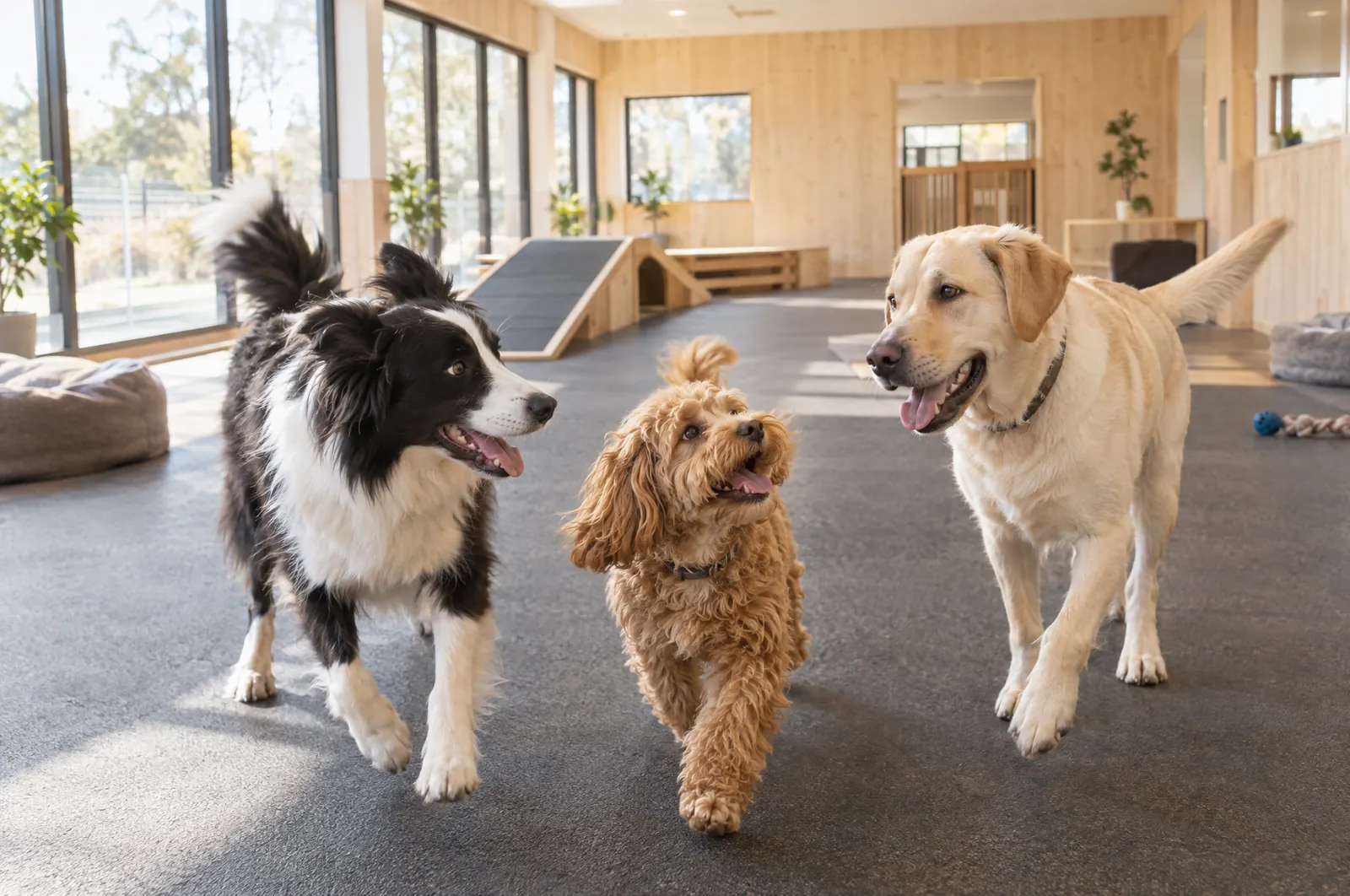
Most Australian dog daycares require three things before your dog can start: an up-to-date C5 vaccination (the C3 core plus kennel cough), a temperament assessment or trial day, and current flea and worm treatment. Many also ask for adult dogs to be desexed and set a minimum age. Requirements vary by facility and state, so confirm the exact list with yours before you book.
The quick checklist
- C5 vaccination, current (the C3 core plus kennel cough).
- A temperament assessment or trial day, so staff can check your dog plays well in a group.
- Desexing for dogs over roughly 6 to 7 months, at many facilities.
- Current flea and worm treatment.
- Emergency contact and vet details.
Which vaccinations does dog daycare require?
Daycares look for the core canine vaccination plus kennel cough cover, which group settings need.
| Vaccine | Protects against | Why daycare asks for it | Typical validity |
|---|---|---|---|
| C3 (core) | Distemper, hepatitis/adenovirus, parvovirus | Core protection against serious, contagious disease | Often up to 3 years |
| C5 (C3 plus kennel cough) | Adds canine parainfluenza and Bordetella | Kennel cough spreads fast in shared air; the classic group-setting risk | Kennel cough component usually 12 months |
| Leptospirosis | Leptospira bacteria | Asked for by some daycares in higher-risk areas (parts of QLD and northern NSW) | About 1 year |
The core canine vaccines, per the World Small Animal Veterinary Association (WSAVA) and the Australian Veterinary Association (AVA), are distemper, hepatitis/adenovirus and parvovirus (the C3). Kennel cough cover (taking C3 to C5) is the lifestyle vaccine daycare almost always requires because dogs share air and space all day. Rabies and canine influenza are not required in Australia (the country is rabies-free and canine influenza is not established here).
Why do daycares run a temperament assessment?
Because daycare is off-leash group play, and not every dog enjoys that. A temperament assessment (sometimes called an evaluation or trial day) lets staff watch how your dog greets other dogs, handles being handled, and copes with noise and excitement.
The assessment protects your dog and everyone else's. If your dog is anxious or reactive in a pack, that's fine; they may suit a smaller group or one-on-one care.
How recent do the records need to be?
Recent enough to still be valid on the days your dog attends. Facilities check that each vaccine is still current.
- Kennel cough (the C5 component) is the one owners get caught out by, often required within the last 12 months, sooner than the core.
- The C3 core is usually valid for up to three years, depending on the specific vaccine and your vet's protocol.
- Some facilities require that a new vaccination was given at least 2 weeks before the first visit, so a last-minute top-up may not count. Vetwest suggests being fully vaccinated 2 to 4 weeks before a boarding stay, and many daycares use a similar window.
Does my dog need to be desexed for daycare?
Often, yes, once they are past puberty. Many daycares require dogs over roughly 6 to 7 months to be desexed, because intact adult dogs can change the group dynamic. Puppies below that age are usually exempt. Policies differ, so check.
What records do you actually need to show?
Documented proof from a veterinarian. Most daycares accept:
- A vaccination certificate or record showing the vaccine name, date given, and date due.
- Your clinic's details, so the daycare can verify if needed.
- Increasingly, a digital record or shareable link rather than a paper card.
A photo of a faded paper card from years ago is where enrolment slows down. Clear, current records make the first day smoother.
How do you avoid redoing this for every booking?
Keep one reusable record instead of rebuilding it for daycare, then the groomer, then boarding, then the vet. Otherwise you end up re-entering the same vaccination details into a different form every time.
Tend Pass is built for this. You add your pet's records once, then share them with a venue by link or QR code when a booking needs them. The daycare sees the vaccine names and dates with the original certificate attached, and you skip the inbox archaeology.
The short version
- Bring proof of an up-to-date C5 (the C3 core plus kennel cough).
- Check the kennel cough date first; it expires soonest (often within 12 months).
- Expect a temperament assessment before your dog joins the group.
- Adult dogs often need to be desexed; puppies usually do not.
- Rabies and canine influenza are not required in Australia.
- Confirm the exact list with your daycare, because requirements vary by venue and state.
Related reading: vaccine records a boarding kennel needs, how long before boarding your dog should be vaccinated and why your pet's records keep getting chased.
Sources
- WSAVA, 2024 Guidelines for the Vaccination of Dogs and Cats
- Australian Veterinary Association, Vaccination of dogs and cats
- Vetwest, Boarding your dog or cat and vaccinations
*General guidance, not veterinary advice. Always confirm requirements with your veterinarian and your chosen daycare.*